
You know that feeling when spring arrives, and you suddenly notice a damp spot on your ceiling? Yeah, that sinking feeling in your stomach. Been there. And let me tell you, it’s almost always something that started months earlier—back in winter when nobody was paying attention.
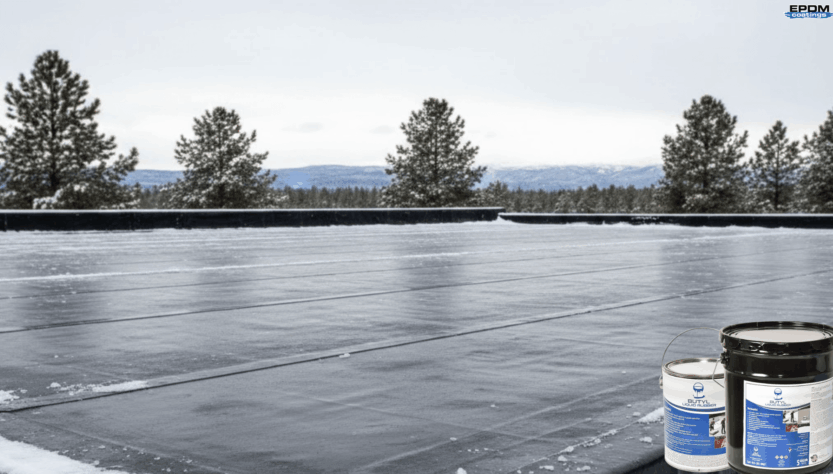
Winter is brutal on roofs. Not in an obvious, dramatic way. It’s sneaky. The damage happens slowly, quietly, one freeze-thaw cycle at a time. By the time you actually see a problem, the real damage has already been done.
What Freeze-Thaw Cycles Actually Do to Your Roof
Okay, so here’s what’s happening up there while you’re inside staying warm.
Water gets into the tiniest crack or gap. It could be around a seam, near a vent, anywhere really. Then nighttime hits, temperature drops below freezing, and that water turns to ice. Simple enough, right?
But here’s the kicker—ice takes up more space than water. About 9% more, actually. So that tiny crack? It just got pushed open a little wider.
The Next day, the sun comes out, ice melts, and water seeps deeper into the now-bigger gap. Night falls, freezes again, expands again. This brutal little cycle repeats itself dozens, sometimes hundreds of times every winter.
Flat roofs get hit the hardest. Same with RV roofs, mobile homes, and older commercial buildings. Basically, anywhere water tends to sit rather than run off. If that sounds like your situation, you already know the anxiety that comes with every winter storm.
Why Most Rubber Coatings Fall Short in Winter
Here’s something that took me a while to figure out. Not every roof coating can handle cold weather. In fact, a lot of them make things worse.
Standard water-based coatings? They get stiff when it’s cold. Brittle, even. And when your roof expands and contracts with temperature changes—which it absolutely does—those rigid coatings crack. Sometimes you can actually hear it if you’re up there.
Think about what your roof goes through on a typical winter day. Morning: cold, everything contracted tight. Afternoon: sun beating down, materials warming up and expanding. Evening: cooling off again. That’s a lot of movement for any material to handle.
What you really need is a rubber roof sealant that moves with your roof. One that bends instead of breaks.
The Real Benefits of Liquid Rubber Roof Coating
So why do so many roofers and building owners swear by liquid rubber roof coating? Let me break it down based on what actually matters.
It stretches—a lot. We’re talking 500% elongation with quality butyl rubber formulas. To put that in perspective, imagine stretching something to five times its original length without it tearing. That’s the kind of flexibility that survives winter.
Temperature extremes don’t faze it. Good formulations work from -40° to 250° Fahrenheit. I don’t care where you live—that range covers you.
No more seams. This one’s huge. Seams are where roofs fail. Period. When liquid rubber cures, it forms one continuous membrane across your entire roof: no joints, no edges, no weak points. Water has nowhere to sneak in.
Solvent-based beats water-based. For cold weather, especially, Water-based coatings need warmer temps to cure properly, and they’re fussier about moisture. Solvent-based rubber coatings are much more forgiving.
Getting Your Roof Ready for an EPDM Roof Sealant Application
Alright, enough theory. Let’s get practical. If you’re going to do this, here’s how to do it right.
Clean the surface properly. And I mean properly. Not a quick sweep. Get up there with a pressure washer if you can. Years of dirt, oxidation, chalky residue—all of it prevents the coating from bonding correctly. This step is boring but absolutely critical.
Fix problems before you cover them. Walk the roof. Look for cracks, bubbles, separated seams, and soft spots. Mark them. Repair them. Putting a coating over existing damage is just hiding problems, not solving them.
Timing matters more than you’d think. Best results happen when it’s above 50°F during application. The EPDM roof sealant will still waterproof at lower temperatures, but complete curing takes longer. Check your forecast—you want a few decent days in a row if possible.
Go thick or go home. Seriously. Thin coats save money upfront and cost you later. Aim for that 20-mil thickness. One gallon covers roughly 50 square feet when applied correctly on smooth surfaces. Don’t cheat this.
Rubber Coatings Last Longer Than You’d Expect
Here’s something that surprised me when I first looked into this. A properly applied rubber coating can extend your roof’s life by 18 to 20 years. Not five. Not ten. Up to twenty years of additional protection.
Do the math on that. Compare it against what a new roof costs. Or what water damage remediation runs. Or the hassle of emergency repairs in the middle of January, when every contractor is booked solid.
Suddenly, spending a weekend on roof prep doesn’t seem so bad.
And once it’s cured? You’ve got a roof that handles ponding water, temperature swings, UV rays, the works. Rain can sit on it for days, and nothing gets through.
Just Do It Before You Need To
Look, I get it. Roof maintenance isn’t glamorous. It’s not fun. There’s always something else competing for your time and money.
But here’s the reality. The absolute worst time to think about your roof is when water’s already dripping onto your floor. At that point, you’re not maintaining—you’re panicking. And panic decisions are expensive decisions.
Winter’s coming whether we’re ready or not. Your roof is going to face those freeze-thaw cycles regardless. The only question is whether it’s protected when they hit.
Take a weekend. Get up there. Clean it, prep it, coat it. Future you—the one who’s warm and dry next February while the neighbors are dealing with leaks—will be grateful you did.
Your roof’s been quietly protecting you for years. Maybe it’s time to return the favor.